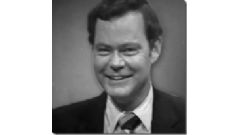
Frank Avis Continues: 3DB and beyond
Posted at: September 30, 2008
Related Topic(s): 1970s I moved back into the city to 3DB which was sited in the Herald Sun Headquarters.
Talk about a massive rabbit warren. I was told to go up to the second floor for a meeting in an office and failed in two attempts to find it. In the end they had to send somebody down to escort me there. Embarrasssing. I’m remembering Brendan Sheedy (The Manager), Paul Thompson (PD) along with Geoff McComas, David Shoreland (ex XY), Laurence Costin (absolutely lovely bloke), my mate Col Denovan (XY), another great mate Ian Nicholls, Wally Ryan, Alex Shabs (ex AK), Chris Lewis and many others who will remind me that my memory has crashed. Sorry.
Anyway the pervading atmosphere was bad. DB had been a giant in the industry but was now declining.
In fact, I hope he won’t mind me saying this, but Col rang me when he found out that I could be moving to warn me to reconsider. So, it was a pretty gloomy outlook. Still, there was a job to do and we all got on with it. I have to tell you the most wonderful story about the first few days. I walked into the newsroom, had a fossick around and found a bank of printers along the rear wall. There must have been four to six printers just sitting there. I kept checking them every hour or so and couldn’t find any sign of activity. I waited until late in the day and eventually asked somebody what they were or whether they worked. Whoever it was didn’t have a lot of information... He thought they worked occasionally.
Anyway, I went another 48 hours looking at these printers and finally could no longer contain myself. So I asked Laurence what was going on and he said that he thought the previous News Director had got sick of reading through all the stuff and had simply turned them off. Laurie and I pulled the printers out and sure enough the plug had been pulled out. We stuck it back in and they all went berserk. I sat there dumbfounded as I watched 3DB NEWS get a copy of every story filed to the Herald Sun network from around the world. I sat there all afternoon, bewitched. It was like going to heaven. We had the hard news, the backgrounders, and—believe it or not—even the phone numbers of people involved.
We never turned the printers off again, not as long I was in the ND’s chair anyway.
Then, a week later I happened to be patrolling the corridors of the Herald Sun upstairs—probably trying to find the office of somebody important I was supposed to see—when I walked through what appeared to be some sort of central receiving agency for newswires.
As I walked through some lady looked in my direction and said, "It’s about time you people came back to get your stuff." I looked bewildered and she said, "Aren’t you the new bloke from DB?" "Yes," I agreed, "I am." "Well," she said, "there’s all your copies... No one’s picked 'em up for about 18 months."
There in front of me were several huge spikes, marked DB, full of stories going back over a year. Every story filed by local reporters was copied for DB and left on the spike. This was astounding... Certainly the most formidable source of news available to a radio station I have ever seen or heard about. I hope you don’t mind a bit of boasting here, but let me tell you for 12 to 18 months DB was the hottest source of radio news on the planet. We broke so many stories you wouldn’t believe it. I know the station was in serious trouble overall but for a wonderful year our news team was up there and running. And we loved it. We kept telling each other what stories we’d broken and how far in front we were. These were difficult times but for the newsroom we were humming and really proud of the stuff we were doing. I reveled in the standard of our product. And I could tell our peers were paying attention. When you get two job offers from Sydney while you’re there you know something is going right.
Speaking of Sydney, I found myself facing a dilemma. Every morning around 8:15 to 8:30 one of the printers fired up from the Sydney office with a stack of stories which would be leading the afternoon papers in Sydney that day. We had a sister station relationship with the mighty 2UE but I really didn’t know what to do... Did they already have these stories and if I went to a lot of trouble and started giving them a one hour lead over their rivals would they simply regard me as a smart arse? Remember there’s a lot of jealousy in our trade. Anyway, one morning I bit the bullet when a really big story came in on the Sydney wires around 8:45. I rang the UE desk and can’t remember who was there—Vincent Smith, Greg Milne, not sure—but I asked if they were running the story of a well known pop star going to jail over a serious offence. They hadn’t heard about it... Indeed they almost laughed. So I read them the story that would be front page in the afternoon papers in around two hours. They were stunned. But the evidence I’d given them was overwhelming. The reporter had just a few minutes to make a decision on whether to accept what I’d told them or reject it. He went with it. It was a big story and UE broke it more than an hour before their opposition. From that day on, as long as I was in the DB news chair, we rang the UE desk around 8:45 with any hot stories coming in. I don’t know whether they really liked it—Sydney doesn’t like getting favours from Melbourne—but the arrangement continued and was very effective.
Another tale—detailing just how much information we had—concerns the sudden death of the great Bing Crosby who collapsed on the golf course (that’s probably what’ll happen to me). Anyway Ivor Davis ran this wonderful story with tributes from far and wide including a lovely piece from Dorothy Lamour, the female lead – remember – in those great old Hollywood Road movies with Bob Hope.
And there in the middle of the script, in brackets, was a Los Angeles phone number. I knew it wasn’t Ivor’s number and I kept thinking it’s in the middle of the Dorothy Lamour tribute... Surely it couldn’t be, could it?
I went into the booth rang the number and the voice at the other end said, "Hello, Dorothy Lamour."
I was stunned, quickly explained I was ringing from a radio station in Sydney and then waited for her to hang up in my ear. No way. She laughed softly and then spent 15 minutes telling me about Bing and Bob and how she loved the road series the three of them did in the 1940’s and 1950’s.
We did this sort of stuff all the time... The resources were unbelievable.
We should have done fair dinkum "news and info" but things were difficult for Brendan and I could never talk him into giving it a fly. Or rather, he probably couldn’t talk the Herald Sun heavies into giving it a go. I’m positive it would have worked. Take my word for it. And allow me to go into some detail, including a NEWS AND INFORMATION CLOCK that I drew up for DB and later 2GB back in the mid-70’s.
I warn all readers the following information is probably for the consumption of journos only. It’ll just bore everyone else. So I’ll give you a clear warning when it’s over and you can then resume checking out the gossip, having given the technical stuff the big flick.
It was obvious from the mid-70’s that we were heading into specialist radio, particularly with the possibility of FM ripping into the music arena over the next decade. I’d listened to a bit of US news and info and was totally unimpressed. It was heavily national/international/political, so that I guess it could be easily formatted nationally. Indeed, quite a few of the formats were nationally-syndicated with 1 minute breaks or "local news". Maybe it worked in the US but I can tell you then and now, forget it in Australia. If you’re in Sydney at 7:30 in the morning and the Harbour Bridge is closed for an hour, it is THE STORY of the day. You can forget the latest Canberra surveys or US forays into Deep Mongolia. When Sydney’s main artery stops, Sydney stops and the audience wants to know about it, big time. But it’s not a story in Melbourne, Brisbane or Perth. Whooooo cares!
My concept for news and information in Melbourne and Sydney was LOCAL... Underlined... So it was very labour intensive. And you couldn’t on-sell it around the nation. End of Frank’s dream.
But it would have been good radio. Still could be.
Basically, you’re looking at my NEWS AND INFO format 5:30/6:00 AM to 9:00... Switching to NewsTalk Radio till noon... Resuming NEWS AND INFO 12:00 to 2:00... Back to NewsTalk until 4:00 and running NEWS AND INFO 4:00 to 6:00/7:00 PM.
And there’s no padding. The stories run as long as they run. The infamous “voicer” would be banned (more on that later, when I journey to 2GB). I don’t wish to be offensive but listen to the ABC’s NEWSRADIO and then go in the opposite direction.
I also incorporated a lot of production aids, including thematics which meant you had to include a panel op or an extremely gifted announcer/panel op to keep the show running.
The concept was to move it quickly and to keep the information flowing.
I won’t use the “clock concept” here, but rather simplify it into a half-hour block format which just keeps repeating:
00:00 Station ID/news thematic 00:15 Situationer* 00:30 News, sports and weather 05:00 90 second commercial break and community announcement 07:00 The Big Story/The Big Interview 09:00 Sports wrap 10:00 Local/interstate weather 11:00 Situationer* 12:00 Business Update 13:00 90 second commercial break and community ammouncement 15:00 News briefs and city weather 17:00 All the Sport 20:00 Situationer* 20:30 90 second commercial break 22:00 Business update 23:00 Feature** 25:00 City weather, interstate and international 28:00 90 second commercial break and community announcement 30:00 Repeat the format
Notes: *Situationer is normally the latest traffic update, but can include any major happening having an impact on the city. **Feature. The idea was to allow room for special input, eg backgrounders on big events or high profile names. In Sydney we planned to use the feature for a special report titled "What’s going up, what’s coming down". The intention was to have a reporter exclusively following major building projects across the City, updating the current state of play.
Not just the huge projects but things that were happening right across the metro area. Just imagine if you were driving West along Parramatta Road and we were updating you on a building project you were just passing, letting you know when it would be finished and what it was for.
The idea was not just to keep the listener briefed on the "hard news" and the obvious information like weather and traffic, but to also sell our credibility on "what was going on" on the wider frontier.
Well, so much for News and Information programming.
Basically, I failed to win that one and things started to drift away at 3DB. When Ron Hurst rang from 2GB I was ready to make another try at the concept, thinking GB, with its Fairfax affiliations, was perfectly suited to the concept.
Ron seemed interested in pursuing the idea and so I made the move to my old home, the Harbour City. Again a lot of my mates rang me saying, "Don’t do it... It’s suicide," but I figured you only live once and you’ve got to give it a try."
I should also mention that this was the time when I was really into long distance running, an interest I’d acquired when our intake had won the 1956 National Service road race.
I’d somehow got through the Big M Marathon, after injuring my knee at cricket the day before (Col Denovan kept asking me why I’d be playing cricket the day before I was to run 42km and he never got a satisfactory reply). I was training with ultra-distance runner Tony (Run Run) Rafferty at the time and wondered out loud how far an average person would go trying to do what Tony did. He replied, "Why don’t we find out," and so we both set off on his historic Melbourne to Sydney to Melbourne run. It was my fantasy to make it to Sydney, but by day three—after running 125 kilometres—my ankles admitted defeat and our team just staggered on to the border at Albury. I can still see the sign reading "301 kilometres". I think Tony actually passed me as he ran back down the Hume Highway from Sydney. I was assisted by a wonderful team, including one of the journos from the newsroom, Chris Lewis. I wonder if he remembers that week?
Enough of that stuff. Let’s get back to the main game.
It’s late ’79 now and In the next episode we tackle 2GB—and fail.

View Comments (0) | Add Comment | Permalink
Frank Avis Returns To Melbourne To Continue His Radio Career
Posted at: August 27, 2008
Related Topic(s): 1970s It was the mid-70’s and we were heading back East after a short but very enjoyable time in Perth. And yes, I repeat, I felt badly because I’d let Rhett Walker down by not staying longer, particularly as 6PR was now performing in brilliant style. But there you are: anyone following my career can see how I never stayed that long in one place. I took on a specific job, succeeded or failed, and then moved on to the next one. Actually I had two decisions to make on my return to Melbourne... the new 3MP, hopefully to be established in Frankston, and a surprise second possibility, an offer from Bill Howie to return to my old job at 3AK.
I met with both sides and after talks with Norm Spencer I opted to stay with my original choice, to set up News and Information at 3MP, an incredible opportunity to start from the beginning.
It’s a long time ago but I remember there was Brian Rangott, Mike Walsh, Joff Ellen and Judy Pollock among the main shareholders. Ray Bean was the GM, John Lloyd, from KZ, had moved into the job of Sales Chief, Murray Korff was the Chief Engineer, Geoff Charter was in the Programming chair and I was working side by side with Geoff Brown from early in the piece as we were charged with assembling a wide range of community licence promises, some of which were going to be extremely difficult to meet.
We were lucky to win the support of several modern-thinking religious leaders in the community, otherwise I think some of the religious commitments might have made us sound like a country station on a Sunday morning (no offence I hope). Ray, Geoff and I worked for some time to convert a lot of the religious content into genuine community information. It took a bit of discussion but we were able to convince the local churches to run "informationals" across the schedule, professional 30-second clips which accented the community side of the various churches... counselling, youth work... a series of direct messages from the church aimed at solving community problems rather than 15-30 minute lectures by clergymen. This method turned out to marry directly into the general profile of the station. These prestigious, community oriented information pieces certainly did no harm and we have to regard them as a key success.
On the news front, I had Barry Owen, Ray McGhie, Peter Young and Col James with me, among others, and we were looking for a central plank to make us stand out from the rest. I sat down with the map of Melbourne and kept looking at the geography. What was there here that we could use to cement our image? I kept returning to the Bay. Now, Melbourne is a very unusual city. Sydney is very aggressive, incredibly competitive and very, very confident. Melbourne is very internal. There are no show-ponies in Melbourne. Have a look at their stars. Most are "nice guys" who are never overtly stars.
Very few people succeed in Melbourne, saying publicly "look at me, aren’t I terrific?" Sorry, I digressed there for a while. The more I looked at Melbourne the more I saw this huge tract of water smack in the middle of the city... Port Phillip Bay. Funny thing about the Bay, hardly anybody seemed to talk much about it, certainly not boast about having it (nothing like Sydney Harbour, for example). I said to Ray that we should wade into the Bay big time... We should own it from the moment we went to air. But I didn’t know how.
Then one night at my home in Mount Eliza I was wading through files and files of ideas and research and I put two things together. "The BAY and the WEATHER." It all became clear. We could own the Bay via the weather. I couldn’t do a deal with the Weather Bureau but as I looked around we could come to an exclusive agreement with the local Volunteer Coastguard. They were the people, after all, who had to head out on to the water if someone had to be rescued. But how do you take advantage of any such association? How does it transfer to, if you like, controlling the territory?
By bringing in a RED and BLUE ALERT system, that’s how. I think the idea came to me about 10 o’clock one night and my colleague Geoff Brown was in the lounge room within 15 minutes as we reviewed the whole scheme.(I should point out that Geoff had almost moved into our lounge room permanently by this time as we spent whole days working on all of this critical on air content... More behind the scenes stuff on this subject later on.) It only took Geoff 30 seconds to look at me, smile knowingly, and confirm that it would do everything we wanted. It would, in one simple stroke, give us critical ownership of a key geographical area. And it wouldn’t be just for summer, this was a 12 month deal.
But did General Manager Ray Bean want ownership of the Bay? Was that his plan as well? We put the idea to him the next morning, pointing out that we hadn’t even discussed it with the Coastguard hierarchy. Ray was pretty much like Geoff: it took him about 30-seconds to nod in agreement and give us the go ahead. There were long talks with the Coastguard because what we were asking was a 24 hour, 7 day commitment. Mind you, there was a huge plus in the prestige factor to the Coastguard as well. In the end we did the deal, which included a stack of "informationals", voiced by the Coastguard themselves, about boating and boating safety. These guys became local celebrities within weeks of MP going to air. But it was a significant responsibility for the top officials at Coastguard headquarters.
By the time we got to air we not only had red and blue alerts but Ray and Murray had briefed the architects and the news and studio block had a RED and BLUE light alert system.
When the light went on the jock knew that he had to play the appropriate cart several times an hour.
The alert could be phoned in by Coastguard at any time and be on air in minutes. It worked wonderfully.
And of course The BAY theme was perfect. Little did Geoff and I know when we put the original proposal together that Ray had already been considering our programme positioning sales pitch... "Bay city radio". Now, we knew why he smiled and nodded in approval that morning.
The other plus was that the station theme music was being done by Peter Best. He was also charged with doing the news theme. We played around with all sorts of stuff, including a montage of famous moments in history, but it was just too long and too over the top. Not the sort of image we wanted to portray at MP. So in the end Pete came up with a short, simple news thematic which worked admirably.
Then, we got to talking about how we could individualise the news ,making it instantly recognizable.
And we came up with a plan to add SFX to the weather. Pete went crazy, and ended up giving us about a dozen weather variations. If it was sunny we had this soft, sunny theme we played under the weather. There was this gorgeous tinkly thematic we could play under the weather if it was really cold and rainy. I know it created a bit of flack in the trade... I can imagine what the team at AW would have said about such sacrilege, but I think it worked exceedingly well in augmenting the on-air sound. Ray wanted "fresh" and the weather thematic s certainly met the station criteria.
The other stuff we did was to run a series of historical pieces, researched by either Col or myself, which followed key news broadcasts during the day. These usually ran an average of 30-seconds and were "think pieces" about something significant or potted versions of famous happenings which had occurred on that day. The first one I did, on our opening breakfast show, was an investigation on whether it was possible to build a bridge across the Bay entrance. If you want to go from the Peninsula over to Geelong and along the Great Ocean Road you have to go north into the city, across to the west and down the Geelong Road, a journey of more than an hour. Putting a bridge across the Entrance would have reduced that to 15 minutes. It actually excited a lot of interest, to tell you the truth ,and I got a lot of calls from engineers commenting on the project.
Col also did a series on the assassination of JFK, summarising all of the ballistic information which suggested that if Oswald had indeed shot Kennedy then he must have been the best marksmen in the history of the world. This was Robin Hood with a rifle. This too excited a bit of comment. So the general theme of providing a news service, high on information input, seemed to work pretty well.
Geoff and I also pioneered a lot of local historical stuff which Andrew Rutherford was to expand into the VICTORIA STORY series in later years. We took famous buildings and well known sites in the area and told their stories, along with info on how to get there including a Melway reference.
I had talks with the man who owned the Melway maps - Iven, a really terrific bloke - who agreed immediately to allow the map references to be used on air. In fact,he loved the idea so much he put 3MP ads into any spare space he had as part of the deal. It didn’t cost us a razoo.
I hope you’re all following this?
Everything seemed to be moving along nicely... The format was in place, Ray was assembling the cast, Murray and his engineers were working on the complex job of getting our signal right and so Ray and I went to meet the Chairman of the Control Board, Myles Wright, who had to sign-off on the license.
We had a most convivial meeting during which he asked us a lot of probing questions, concentrating on the various promises made in the original application, finally announcing that he would not be signing our license as we had not meet quite a few of our crucial local requirements.
There was a strange quiet in the room as he smiled and said goodbye, until we came back with a new plan.
I drove back to Frankston absolutely shocked. Ray headed off to the city for an important meeting, doubtless about what had just happened. I got back late in the afternoon and rang John Lloyd who was similarly shattered. So I thought I’d better do something about my main areas of interest to see if the original promises could be accommodated in some way. Yes, I rang "Old Faithfull", Geoff, and we sat up until around 3:30 in the morning using the same methodology - converting everything to across the station "informationals" - to see if it would work.
We took our finished product to Ray first thing that morning and he was suitably impressed.
I don’t know how important this was but I can only report the next time we went to the Board the license was officially approved.
Now all we had to do was to get our signal correct, ensuring that it wasn’t impinging on other stations, especially at night. Easier said than done. Murray Korff was practically living at the transmitter site, along with a team of fellow engineers... Consultant Tom O’Donohue, Control Board reps Frank Waldron, Ray Kelly and Dave Paget, and RCA techs Jim McGrath and John Innes. I don’t want to depict myself as "Mr Goody two shoes" but I took an increasing interest in events at the TX, not necessarily because of completely altruistic motives but essentially because, if they failed, I would’t have a job and we’d just bought a lovely home in Mount Eliza.
So, I started making regular trips to the TX at night, and gradually my wife Anna started preparing food for the gang there. Eventually this turned into a sort of nightly ritual. When the techs were working at night, and I think it was pretty much 7 days a week, I was there with the food, to run messages, make phone calls and provide whatever help I could.(Anybody who’s known me for longer than 15 minutes would know that this did not include any technical matters. Frank and technology parted ways a long time ago and we’re not going to be reunited.) I don’t think it’s possible to describe how all of these people just came together to get 3MP to air.
You wouldn’t think the Control Board Techs would have had any more than a bureaucratic interest in events but let me tell you they were down there in the trenches, night after night, trying to get the signal array correct. This went on and on for some considerable time. We couldn’t go to air till the Control Board approved the performance of the transmitter, especially that the signal was not causing any problems for any other operators. Truly, I didn’t think it would ever be solved. One night the group had been going from sun-up till 2:30 the following morning when Murray Korff fell asleep standing up and started to fall forward into the back of the open transmitter. As I remember it, Tom O’Donohue and Frank Waldron leapt forward grabbed his shirt and pulled him back from almost certain death. "That’s it," said Frank Waldron, "we’re all going home to get some sleep."
Eventually there was this magic moment when we got 5 K signal to air. It was perfect.
I raced home, grabbed a magnum of Stonyfell champagne and we toasted the future of MP as we sent out our first official signal. It was 2:42 AM, July 21, 1976. Harry Wilde was the announcer back at the station in Frankston and the first track played on Melbourne’s newest station was John Paul Young’s "I hate the music". Never has a song sounded so good.
As a matter of interest I still have the bottle of champagne, appropriately marked with all the salient details, which I’d love to pass on to 3MP if anyone is interested in preserving some of the station’s history. Feel free to call me and I’ll ensure it’s delivered safely. Otherwise it’ll probably end up in a garbage bin somewhere. That would be a pity because so much went into that first signal and MP became an immediate hit, an unsual blend of local and big city radio, a format which later worked a treat for WS in Sydney.
One of the other tactics much discussed by Frank and Geoff in the wee small hours of the morning was how to carry a substantial "local" load without appearing to be a country station. Everyone, especially Ray, knew we’d be dead in the water if we sounded provincial.
We could control a lot of on air content, but not the ads. Everyone forgets that the audience’s perception of a station is not just from the music, news and the jocks but from the commercial content as well.
We knew John Lloyd and his team could sell MP’s schedule many times over from the local market but what would that do to our image as a major metropolitan station. How would we sound if every second ad was for "Harry’s hamburger stand" in Frankston? Bad, that was the answer. So we spoke at length to Lloydie and his sales team, explaining how - though heavy local advertising would pay our bills - it might also destroy the station as a major player in a big city. The programmers had nightmares that the audience perception of MP would be that of a "country station". The sales team was terrific. Everyone co-operated to achieve the right balance even though it often hit the sales guys in the hip pocket for the first three months. Anyway, the joint was a tremendous success from day one .We were elated.
I’m remembering back to those days... I don’t know whether I mentioned the jocks, but I’m recalling John Burgess, Brian Bury (absolutely wonderful bloke),Richard Combe, Dean Matters, Keith McGowan and others to whom I apologise. My memory is shot.
Have I mentioned that we returned to the traffic girls concept and that I contracted a range of businesses, mainly service stations, on key roads across the metro area? This not only gave us excellent updates on traffic, but also good sources for happening news. The other thing I did was do a deal with a major provincial newspaper chain, who happily supplied us with all of their weekly publications in return for a mention as the source. This also provided us with some top news stories. I remember we lead our breakfast news with one story from Western Victoria on a Tuesday, only to see it pop up as a big deal in the Herald the next afternoon. I loved that.
The other interesting story is what we did during the great petrol strike in the mid-70’s. As fuel was running out we found more and more people in our local Peninsula area were finding it harder to get to work. So I put a concept to Ray that we set up a "car matching" pool. There was one card file of people who could offer lifts and another composed of those who were looking for a lift, willing to help pay for the petrol. Ray loved this idea from the first 10 seconds and it was on air the next day. The girls set up a special office with the phone lines open from 2-4 every weekday afternoon. We took down the details and put the two groups in contact with each other. Really a tremendous success.
The only thing was I was awake in the early hours one day and I thought, "Hang on. What happens if there’s an accident involving one of these match ups? Are we liable?” We had a big meeting the next morning which resulted in a series of on-air disclaimers plus a half-page ad in B&T.
MP was a wonderful learning process and let me place on record that Manager Ray Bean never ever rejected any of my good ideas. I was backed all the way.
But you know me... I got restless. I tried to talk Ray into creating a new position where I could be a Special Assistant to the Manager charged with coming up with all these schemes (Look, I had a million ideas in those days, and candidly I didn’t feel much like putting them forward and having somebody else claiming them as their own). But there was no such position available and Brendan Sheedy was looking around for somebody to take over DB NEWS. I took one look at the Herald Sun facilities and thought, "If anybody is going to make a play for NEWS AND INFORMATION it’s got to be DB." So I made the change amid much sadness, really. But I’d spent the past 12 months putting a peak-hour NEWS AND INFO clock together and I knew it would work in a major city. I just wanted the chance to do it.
That took me out of leafy Mt Eliza and up north back into the big city. Was it a mistake? Look it was just another chapter and I always knew radio was like Broadway... You had to accept you’d win some and you’d lose some. But that’s another story for our next chapter, providing your reporter actually gets off his backside this time and gets it done. Thanks for all your emails, reminding me that the latest chapter had taken a bit too long, including the enquiry from a colleague of years ago who asked if I’d actually passed away between chapters? Still hanging in there mate...
View Comments (0) | Add Comment | Permalink
Frank Avis continues his radio career, now off to Perth in the mid-70's
Posted at: May 19, 2008
Related Topic(s): 1970s We arrived in Perth and the weather was beautiful.
6PR had already launched its format “Gentle on Your Mind” but it still hadn’t succeeded in the ratings. I wish I’d been there from day one, but my arrival was in the early stages and just in time to ride the elevator up to the next floor.
Gordon Leed was ND and I remember Tom Drewell, Tony Stanton and Col James in the newsroom as well as RW, of course–the man running the show, Cherie Romaro doing the music and Tony Hartney, Ted Bull, Dean Matters and I’m sure many others who will remind me that my memory is stuffed.
The music was excellent and Rhett ensured that there was a direct link to the audience with a lot of information including, believe it or not, lost dog and cat announcements.
The news team was really good, particularly with RW’s policy allowing us a certain latitude. We called it “soft editorial”, in that if the story was sad we were supposed to sound as if it saddened us. If it was happy then our delivery was supposed to underline that. The policy makers weren’t even averse to a certain amount of “internal commentary” providing it didn’t impinge on our responsibility of fairness in reporting. The three people doing the on air work were well experienced so I think we managed to stay on the right side of the knife-edge.
I note 2SM launched a roughly similar style, a bit different featuring Brian White and Steve Leibman, a year later. Indeed, Garvin Rutherford actually offered me a position there in that period but that’s another story, a rather strange story, for later on.
I arrived in WA just as the con men were busily infiltrating the state financial system. We had pretenders setting up multi-million dollar international conglomerates and even establishing “banks” using, of course, somebody else’s finance, much of which was subsequently lost forever.
If you want to know the inside story of this wheeling and dealing, involving the financial vultures and their friends “in high places” just get one of the books written about the era. Or go to the library and get a few back issues of the Financial Review. She was a funny old state in those days, folks.
The first thing I noted was the distance between the media and the authorities, especially the police. The WA police, I think, regarded most journalists as pests that needed to be kept at a distance.
This came to a head shortly after my arrival when Perth actually turned on a genuine, national story – a big payroll heist. I whipped down to the scene with my recorder only to be told that we weren’t allowed into the area or to talk to anyone in charge.
After an hour or so a man emerged from the building and gave a statement to the gathered TV and radio journos. He was very good. He took us through the whole robbery, how it was done and what avenues of enquiry the police were pursuing. “Wow,” I thought, ”what a terrific police PR man.”
I wrote down his name and asked one of my fellow journos what his position was only to be told that we’d just been briefed by a journalist from WA Newspapers. Police had taken this trusted journalist on to the scene, given him a full briefing and – out of the goodness of his heart apparently – he’d decided to share some of the information with the rest of us.
I was dumbfounded and went back to work, ringing the Police Minister’s office to ask what they were running here? I guess that caused a bit of friction and apparently a fair bit of embarrassment for Gordon, for which I belatedly apologise.
I certainly learned quickly that the local police did things differently in WA.
Of course, the mid 70’s were dominated by one sensational story: Cyclone Tracy in Darwin.
No one had any idea just how disastrous it was in the early hours. I know Gordon made initial attempts to get someone up to Darwin, suggesting we could tag along with one of the air force crews heading North. The authorities in Perth just laughed and made it clear there’d be no one else on board the flights. It was virtually impossible to get anywhere near the place. We kept getting all of these calls from the Eastern states ,wondering when we’d have someone on the scene. It took a few hours for someone in Sydney to actually look at a map of Australia and realise it’d be a lot faster to send a reporter from Brisbane or even Adelaide. Anyway, we all know now that it was extremely difficult to get anything in or out of Darwin in those early days.
That was almost certainly one of the most frustrating stories of my career. Authorities just weren’t deeply into Public Relations at the time and it was extremely difficult to get any actuality/comment.
I just loved the PR music format. It remains my equal favorite with the 2DAY FM adult format of the 80’s. Although I have to confess I also loved the music of 2MMM FM when we went to air in 1980. And PR was beautifully sold to the advertisers, with a sophisticated campaign featuring the “butterfly” motif. We’re attaching an example so you’ll get the idea.
 After a few weeks at PR it became obvious that the station’s real ratings were significantly higher than the returns we were getting in the surveys. The same thing happened to 2MMM FM in Sydney in later years. This is one of the most intriguing issues in mass marketing: why do the survey audiences take so long to catch up with the real ratings out on the street?
We’re plagued I fear by the phenomenon of “residual goodwill” where a station manages to maintain its ratings figures when every man and his dog knows they’re going down the drain. It can be a radio station, TV channel, even a restaurant or hairdressing salon.
Whatever it is, the audience perception that the company is still a major player takes a long time to evaporate. So you can have a station management getting all the signals that it is in decline but receiving a different story in the monthly ratings. It’s hard to take tough action when you’re still hanging on in the ratings. Like a footy team that is clearly in trouble continuing to just hold on, within a win or two of making the finals.
The trouble is the ratings suddenly catch up with the word from the street and when they do it’s usually in a fairly dramatic fashion. All of us know stations which have just managed to hold on to the rating middle ground for two to three years and then – all of a sudden – Wallop. They suddenly lose 30 % of their audience. The problem is they lost those 2 to 3 years when they should have called in the cleaners and gone for a new format.
I can’t tell you a great deal more about my time in Perth except that gradually I wanted to get back to the main game. There was an offer from 2SM but when I flew across for my interview the situation seemed to have changed.
Then I was approached with word that Norm Spencer (of channel 9 fame) was hopeful of a new Melbourne licence, operating out of Frankston. I won’t need to tell you how putting a whole new station together grabbed me. I just wanted to get over there and do it, so the Perth adventure ended and I guess I let Rhett down by heading back East. Sorry about that.
It was a privilege to watch PR’s programming, though, and a great experience to see the ratings eventually catch up with the real world.
There is one story that remains to be told about PR, a story that is I guess almost mystical in how it demonstrates that journos sometimes know there’s a story there, when no one else can sniff it out. We seem to be able to smell it.
It was I think a holiday Monday and Col and I were the duty team for the afternoon news. We looked at each other in alarm. There was absolutely NOTHING happening. As far as I could see ANYWHERE ON EARTH. Certainly nothing our audience would have wanted to know about anyway.
We did the 1 O’Clock bulletin which was full of politics (Australians absolutely HATE politics and politicians which will probably come as a tremendous shock to the ABC and all the TV networks. The law is don’t run political stories unless they really are genuine stories and never allow yourself to be sucked into a story by politicians or unions. They are so good at that). Sorry, I digress.
Back to that Monday afternoon. We got to 1:30 and I said to Col, “Stuff this, we’re not going to run another bulletin like 1 O’Clock.”
“Well,” he said, “ if there’s no news, there’s no news.”
I picked up the WA phone directory, divided up the state and announced that we were going to ring every police station we find. There was a story out there, we just had to find it.
Col didn’t necessarily seem convinced but he went hard at it. We rang police stations across the state asking if there was anything happening. We were knocked back at every turn. Remember the police in WA were operating like an army unit in WW2 in those days, working on the adage “Never give the enemy anything.” After half an hour that’s what we had, NOTHING.
We did the 2PM news, looked at each other and got back to the phones, knowing we couldn’t possibly inflict that sort of news on our public again in an hour’s time.
At 2:15 I spoke to a Sergeant on duty in a seafront town south of Perth. I asked for the umpteenth time if anything had happened and his reply was, ”No one’s told me anything.” He was pretty grumpy so I got off the phone and looked for the next contact.
Then I paused and asked Col to take a breather. I remember saying to him that the officer never said a direct “NO”. He chose to say that no one had told him about anything.
I started smelling a rat and Col was just as suspicious. The more we talked about it the more we came to the view that the Sergeant didn’t say NO because he was trying not to tell us something but didn’t like to lie so directly
Maybe Psychology 1 was starting to pay off.
We formulated a plan to test our theory, ringing the local Ambulance station, intimating that we already knew something. The next 5 to 10 minutes were really quite astonishing. I’ll try to reduce it to transcript so you get the picture.
FRANK: Hi, sorry to bother you on a holiday Monday. AMBULANCE OFFICER (Like he was taking a call from his mother in law): Yeah, that’s alright. FRANK: We’re just checking on an incident we understand you’ve had down there this afternoon. AMBULANCE PERSON: Oh. Who told you that? FRANK: We were just talking to the local Police Sergeant. (Well, it’s not a lie is it. We were just talking to him. It’s just that he didn’t say anything.) AMBULANCE PERSON: Well, you don’t need anything from me than do ya? FRANK: Well, we really like to double check with all of the services involved, you know, we hear they had to call you out. AMBULANCE: Ok, how many did you hear? FRANK (Interesting question, as I haven’t got a clue what he’s talking about, so just choose a number): I think they were saying there were two. AMBULANCE: No, it ended up three. One died at the hospital. FRANK: Thanks very much. That confirms three dead at the scene… Right? AMBULANCE: That’s the best I can do for you. Ok? FRANK: Thanks very much. You’ve been very helpful. Thanks again.
Now what incident are we talking about?
Col hits the area phone book, gets on to the local store and we find out that a mother and two of her children had wandered out on to a sandbank, not realized the tide was coming in and drowned trying to get back to shore.
Not exactly the joyful story we were hoping for on a holiday afternoon, but a big story nonetheless, and a tragedy that travelled interstate within the hour, courtesy the PR news team.
Col later joined me at MP in Melbourne and then went on to the chief of staff chair at TEN.
We used to talk occasionally on the phone in the 80’s and we always remembered that strong incident which reinforced another unwritten rule: listen to what they say but also pay great attention to the way they say it.
View Comments (1) | Add Comment | Permalink
|